Hot-Dip Galvanized (EN ISO 1461) vs. Pre-Galvanized & Painted Scaffolding Explained
Why painted scaffolding fails from the inside out—and how to choose between EN ISO 1461 post-fabrication hot-dip galvanizing and pre-galvanized steel decks.
| Criterion | Hot-Dip Galvanized (EN ISO 1461) | Pre-Galvanized Strip (EN 10346) | Dip / Spray Painted Steel |
|---|---|---|---|
| Process Stage | Full immersion in 450°C molten zinc AFTER welding | Continuous coil galvanizing BEFORE roll-forming | Post-weld exterior liquid paint film only |
| Typical Coating Thickness | 55 – 85+ Microns (µm) Fe-Zn Alloy | 15 – 27 Microns (µm) Zinc Layer | 0 µm Zinc (Paint peels on hammer impact) |
| Internal Tube Wall Protection | 100% Coated Inside & Out | Partial (Cut edges protect sacrificially) | 0% Internal Protection (Hidden internal rust) |
| Expected Fleet Lifespan | 15 – 25+ Years (Marine & Tropical Ready) | 7 – 12 Years (Controlled / Inland Use) | 1.5 – 3 Years (High maintenance liability) |
1. Post-Fabrication Hot-Dip Galvanizing (EN ISO 1461) vs. Painted Steel
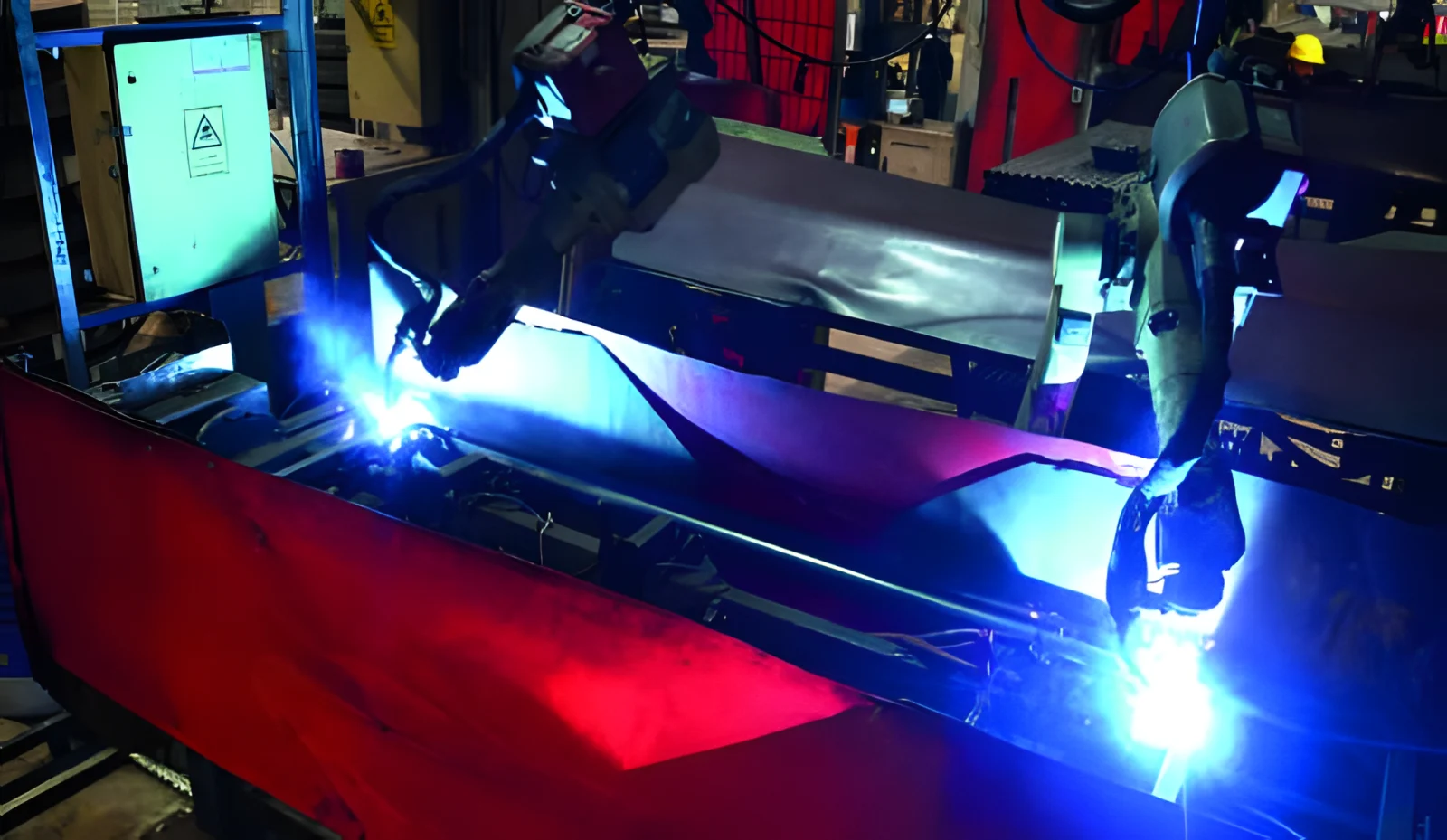
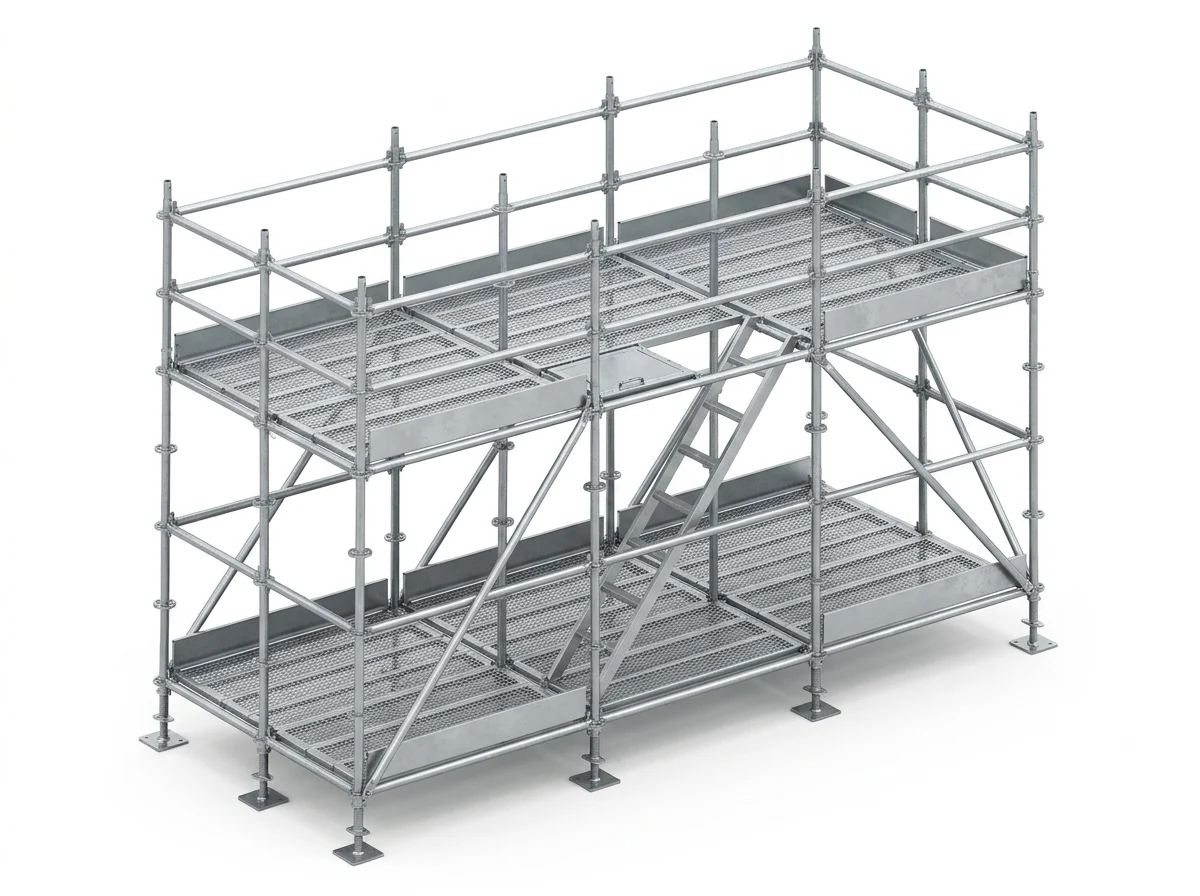
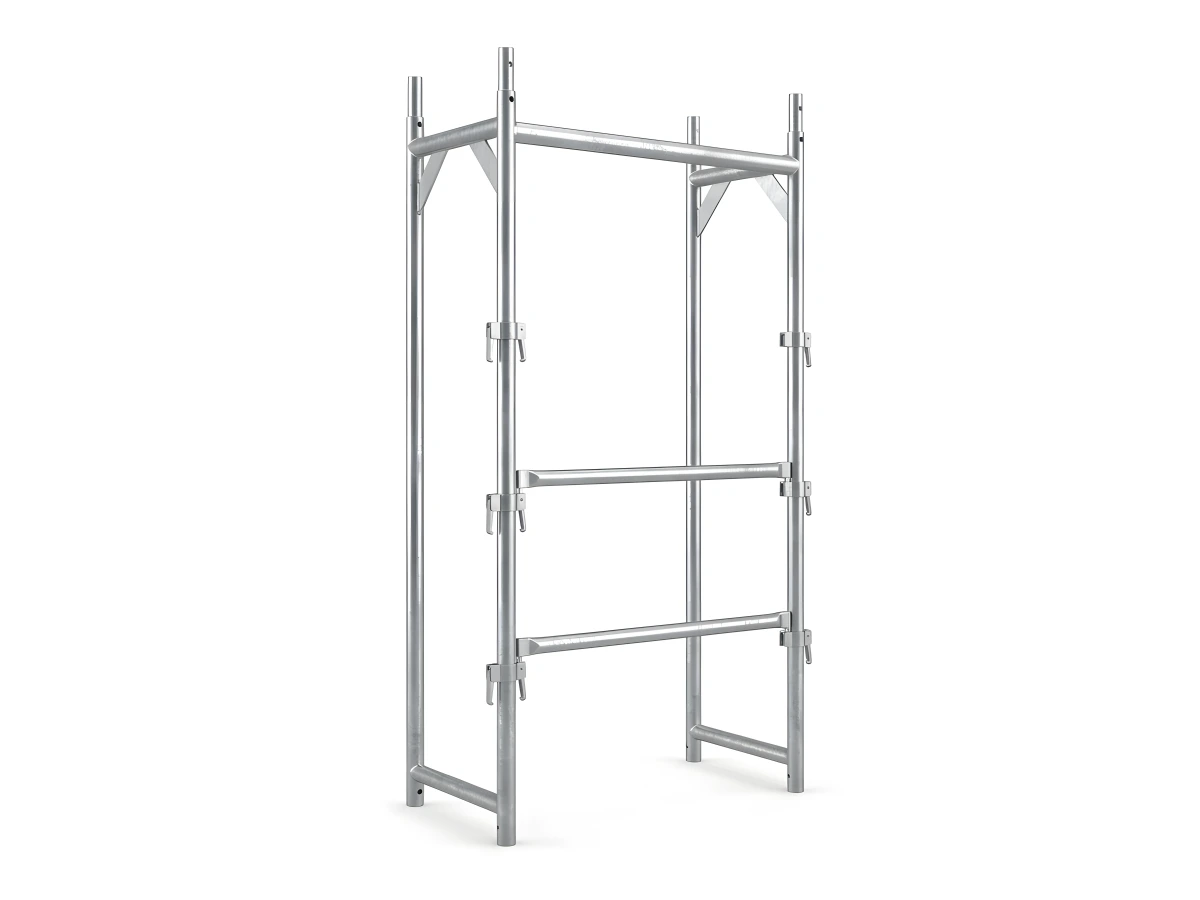
Painted tubes remain bare black steel inside, silently rusting from condensation until wall thickness fails. Immersing fully welded frames and Ringlock standards into 450°C molten zinc under EN ISO 1461 coats both internal and external surfaces with 55–85+ microns of metallurgical Fe-Zn alloy.
2. Transparent Deck Selection: SM-F234 (Hot-Dip) vs. SM-F241 (Pre-Galvanized)
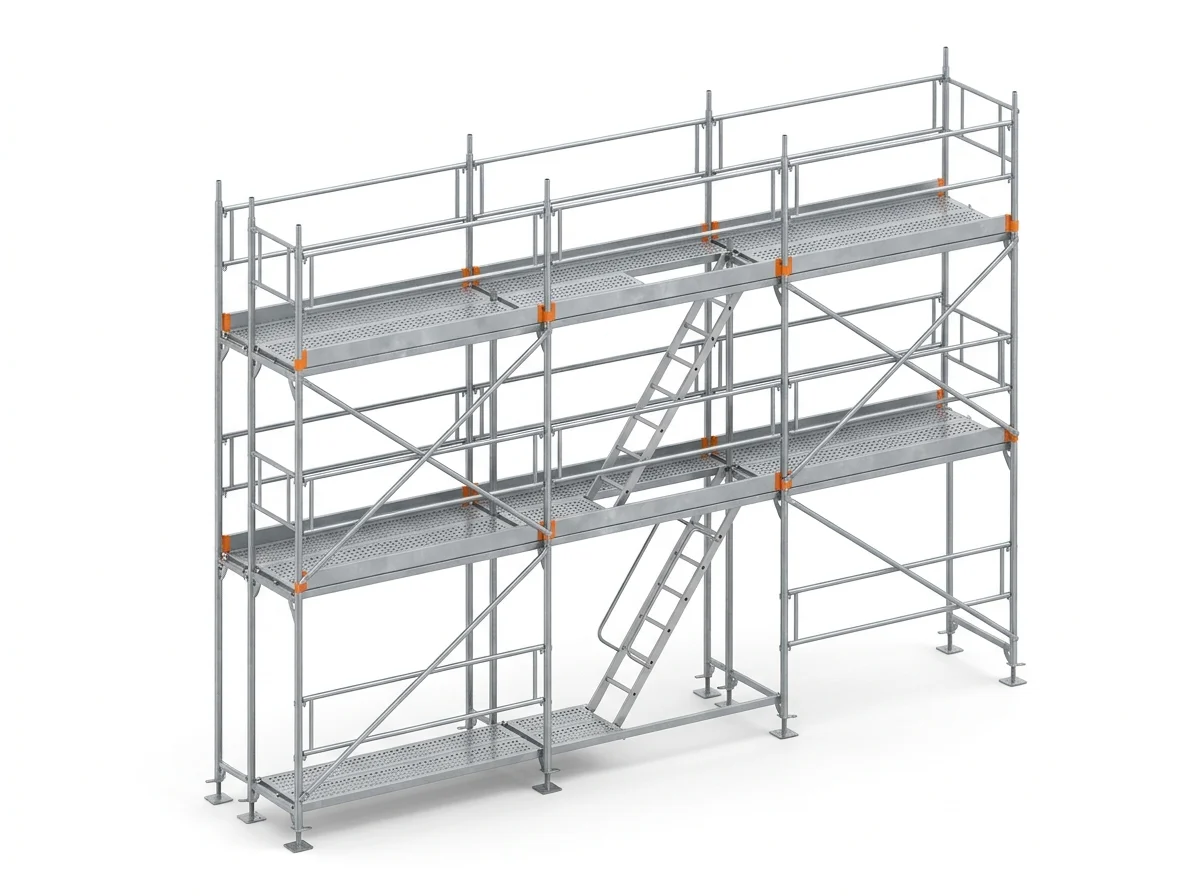
We clearly separate our 1.5 mm perforated steel walk-boards into two distinct SKU families: SM-F234 (galvanized after welding, 16.0 kg at 250 cm, ideal for marine, shipyard, and tropical export) and SM-F241 (roll-formed from pre-galvanized coil, 14.5 kg at 250 cm, offering lighter handling and cost efficiency for inland projects).